
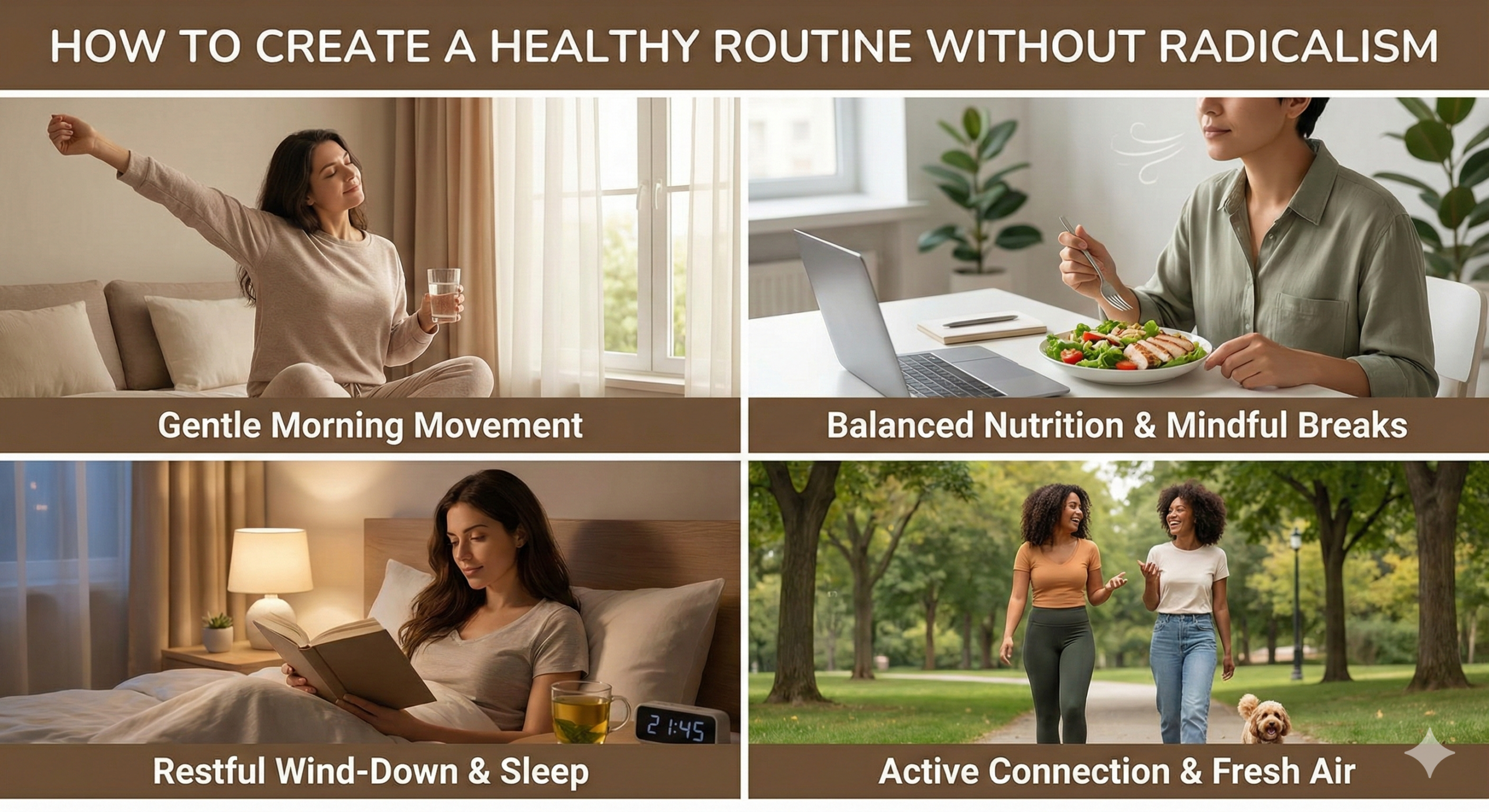
In an era dominated by extreme wellness trends, detox cleanses, and all-or-nothing fitness challenges, the concept of moderation has become almost revolutionary. Social media feeds overflow with before-and-after transformations that promise miraculous results through intensive programs, while influencers promote restrictive diets and punishing workout regimens as the only path to health. This culture of extremism has created a paradox: while more people than ever are aware of health and wellness, many feel paralyzed by the perceived need for radical changes, ultimately making no changes at all.
The truth that the wellness industry often obscures is that sustainable health doesn’t require extremism. In fact, radical approaches typically backfire, leading to burnout, injury, disordered eating patterns, and the frustrating cycle of starting and stopping that leaves people feeling like failures. Creating a genuinely healthy routine means embracing balance, sustainability, and personalization rather than adopting someone else’s extreme protocol.
This article explores how to build a health-supporting routine that enhances your life without dominating it, that promotes well-being without promoting obsession, and that creates lasting change through gentle, consistent action rather than dramatic overhaul.
Understanding the Problem with Radical Approaches
Before diving into how to create a balanced routine, it’s important to understand why radical approaches so often fail, despite their initial appeal and promises.
The psychology of restriction reveals that extreme limitations—whether in diet, exercise, or lifestyle—trigger psychological resistance. When we tell ourselves we can never have something, we often want it more intensely. This phenomenon, known as the “forbidden fruit effect,” explains why restrictive diets so frequently end in binge eating and why people who swear off certain foods often become obsessed with them.
Physical sustainability issues arise when routines demand more than our bodies can reasonably maintain. Working out intensely seven days a week, sleeping only four hours nightly to wake for pre-dawn workouts, or following severely restricted eating plans creates physical stress that depletes rather than enhances health. The body needs recovery, flexibility, and adequate nutrition to function optimally.
Social and practical incompatibility makes radical routines difficult to maintain in real life. Extreme eating plans make dining with friends awkward, rigid exercise schedules conflict with work and family obligations, and intensive wellness protocols often require significant time and financial resources that most people don’t have. When a routine can’t coexist with normal life, it eventually gets abandoned.
All-or-nothing thinking sets people up for perceived failure. Miss one workout or eat one “forbidden” food, and the entire routine feels ruined, leading many to abandon their efforts entirely rather than simply continuing the next day. This perfectionist mindset transforms health practices from life-enhancing tools into sources of stress and shame.
The Foundation: Assessing Your Starting Point
Creating a sustainable routine begins with honest self-assessment rather than copying someone else’s protocol. What works for a fitness influencer, your coworker, or your friend may not suit your body, schedule, preferences, or life circumstances.
Evaluate your current reality by examining your actual daily schedule, energy levels, existing commitments, and genuine preferences. What time do you naturally wake up? When do you have the most energy? What activities do you genuinely enjoy? What are your non-negotiable commitments? Building a routine that acknowledges reality rather than fighting against it dramatically increases sustainability.
Identify your true priorities by considering what aspects of health matter most to you right now. Perhaps sleep quality needs attention, or stress management, or simply moving your body more regularly. You don’t need to optimize everything simultaneously. Choosing one or two focus areas prevents overwhelm and allows for meaningful progress.
Recognize your constraints honestly. Limited time, budget restrictions, physical limitations, mental health challenges, caregiving responsibilities, or other life circumstances aren’t excuses—they’re real factors that must inform your routine. A sustainable routine works within your constraints rather than ignoring them.
Understand your personality and tendencies. Are you a morning person or night owl? Do you prefer structure or flexibility? Do you enjoy group activities or solitary practices? Are you motivated by variety or comforted by routine? Designing a routine aligned with your natural tendencies rather than fighting against them creates easier consistency.
Building Blocks: Essential Elements of a Balanced Routine
A healthy routine doesn’t require addressing every aspect of wellness simultaneously. Instead, it incorporates essential elements in sustainable, personalized ways.
Movement: Beyond Punishing Workouts
Physical activity is crucial for health, but it doesn’t require grueling gym sessions or complex exercise programs. The goal is regular movement that you can maintain indefinitely, not a temporary fitness boot camp.
Start with what you enjoy. If you hate running, don’t force yourself to run. Dance, walk, swim, cycle, garden, play sports, practice yoga, lift weights, or any combination that appeals to you. When movement brings pleasure rather than dread, consistency becomes natural.
Embrace variety and flexibility. Rather than rigid workout schedules, create a menu of movement options for different days, energy levels, and circumstances. Perhaps Monday is a long walk, Wednesday is strength training, Friday is dancing, and Sunday is hiking. If you’re tired, choose gentler movement. If you’re energized, choose something more vigorous. This flexibility prevents the all-or-nothing abandonment that rigid schedules often trigger.
Include everyday activity. Taking stairs, walking during phone calls, stretching while watching television, or playing actively with children all contribute to overall physical health. These activities count, and for many people, they’re more sustainable than formal exercise sessions.
Prioritize consistency over intensity. Moderate movement performed regularly surpasses intensive workouts done sporadically. A daily twenty-minute walk provides more cumulative benefit than occasional two-hour gym sessions. Build the habit first; you can always increase intensity later.
Nutrition: Nourishment Without Restriction
Eating well doesn’t require eliminating entire food groups, counting every calorie, or following complex meal plans. Sustainable nutrition focuses on adding nourishing foods while maintaining flexibility and enjoyment.
Focus on addition before subtraction. Rather than eliminating foods, focus on adding nutritious options. Include vegetables with meals, add fruit to snacks, incorporate whole grains, and ensure adequate protein. As nutritious foods become habits, less healthy options naturally decrease without requiring strict restriction.
Practice the 80/20 principle. Aim for nutritious, whole foods about 80% of the time while allowing flexibility for treats, social occasions, and favorites the remaining 20%. This approach provides the benefits of healthy eating while preventing the deprivation that leads to obsession and binge cycles.
Develop a flexible meal framework rather than rigid meal plans. Perhaps breakfast always includes protein and fruit, lunch includes vegetables and whole grains, dinner includes protein and vegetables, and snacks include nuts or fruit. This framework provides structure without requiring strict adherence to specific recipes or portions.
Listen to your body’s signals. Eat when genuinely hungry, stop when satisfied, notice which foods make you feel energized versus sluggish, and adjust accordingly. This intuitive approach, though it requires practice, creates a sustainable relationship with food that external rules cannot.
Plan for real life. Your eating routine should accommodate restaurants, social gatherings, travel, celebrations, and occasional convenience foods. A routine that requires perfect circumstances fails when life happens.
Sleep: The Non-Negotiable Foundation
Quality sleep supports every other health habit, yet it’s often sacrificed in busy lives. Creating a sustainable sleep routine doesn’t require perfection but does require consistency and prioritization.
Establish a consistent sleep schedule that allows seven to nine hours of sleep. Going to bed and waking at similar times daily, even on weekends, regulates your circadian rhythm and improves sleep quality. This doesn’t mean the exact same minute every night—a consistent range works well.
Create an evening transition routine that signals your body to wind down. This might include dimming lights, putting away devices, reading, gentle stretching, meditation, or a warm bath. The specific activities matter less than the consistency of performing them nightly.
Make gradual adjustments. If you currently sleep five hours nightly and want to sleep seven, don’t immediately try to add two hours. Shift your bedtime fifteen minutes earlier each week until you reach your target. Gradual changes feel less disruptive and become sustainable more easily.
Be flexible on timing, firm on duration. Life sometimes requires late nights for social events, deadlines, or special circumstances. Rather than abandoning your sleep routine entirely, prioritize getting your target sleep duration even if timing shifts occasionally.
Stress Management: Daily Practices for Mental Well-being
Managing stress doesn’t require hour-long meditation sessions or expensive therapy. Simple, brief daily practices significantly impact mental and emotional health.
Incorporate micro-practices throughout your day. Five minutes of deep breathing, a brief gratitude reflection, a short walk, or even sixty seconds of closing your eyes and centering yourself all reduce stress and don’t require major schedule changes.
Identify your decompression activities and protect time for them. Whether it’s reading, creating art, spending time in nature, connecting with loved ones, or pursuing hobbies, activities that restore you are health essentials, not luxuries.
Set boundaries around work, technology, and commitments. Establish times when you disconnect from email, limit social media use, or say no to additional obligations. Boundaries aren’t selfish; they’re necessary for sustainable well-being.
Practice self-compassion when routines get disrupted. Missed workouts, less-than-ideal food choices, or broken sleep happen to everyone. Treating yourself with the kindness you’d offer a friend prevents the shame spiral that derails healthy habits.
Implementation Strategies: Making It Stick
Knowing what to do differs from actually doing it. Successful implementation requires strategic approaches that support consistency without perfectionism.
Start impossibly small. Rather than overhauling your entire life Monday morning, choose one tiny habit. Perhaps it’s drinking water upon waking, taking a five-minute walk daily, or eating one vegetable with dinner. Once this becomes automatic (typically after several weeks), add another small habit. This approach prevents overwhelm and builds confidence through accumulating small wins.
Habit stack by attaching new habits to existing ones. After you brush your teeth, do two minutes of stretching. After you pour your morning coffee, drink a glass of water. After you sit down for dinner, take three deep breaths. Using established habits as triggers makes new behaviors easier to remember and implement.
Design your environment to support healthy choices. Keep walking shoes by the door, pre-cut vegetables in the refrigerator, books on your nightstand instead of scrolling devices, and workout clothes easily accessible. When healthy choices are convenient and unhealthy ones require more effort, you’re more likely to make supportive decisions.
Track without obsessing. Simple tracking—checking off completed habits on a calendar, noting energy levels, or journaling briefly—creates awareness and motivation without becoming burdensome. However, if tracking becomes stressful or obsessive, it’s counterproductive.
Build in flexibility. Create “if-then” plans for common obstacles. “If I’m traveling, then I’ll do hotel room exercises.” “If I’m extremely tired, then I’ll take a walk instead of more intense exercise.” “If I’m at a celebration, then I’ll enjoy food without guilt and return to usual patterns the next day.” Planning for obstacles prevents them from derailing your entire routine.
Embrace seasons and cycles. Your routine doesn’t need to be identical year-round. Perhaps winter involves more indoor activities while summer includes outdoor movement. Maybe certain weeks are busier, requiring simpler meal preparation and shorter exercise sessions. A routine that adapts to life’s rhythms is more sustainable than rigid adherence to a single protocol.
Measuring Success Beyond the Scale
Radical approaches often emphasize dramatic physical transformations measured by weight, body measurements, or aesthetic changes. A balanced routine recognizes broader markers of health and well-being.
Notice energy levels. Do you feel more energized throughout the day? Can you maintain focus more easily? Do you experience fewer energy crashes? These indicate improved metabolic health and better stress management.
Assess sleep quality. Are you falling asleep more easily? Waking less frequently? Feeling more rested upon waking? Quality sleep indicates that your routine supports rather than stresses your body.
Observe mood and mental clarity. Do you feel calmer? More resilient when facing challenges? Less anxious or depressed? Better able to concentrate? Mental and emotional improvements are powerful indicators of a health-supporting routine.
Evaluate physical capabilities. Can you climb stairs more easily? Carry groceries without strain? Play with children without becoming quickly exhausted? Keep up with daily activities more comfortably? Functional improvements matter more than aesthetic ones.
Consider consistency itself. Are you maintaining these habits over weeks and months? The fact that you’re still doing them, even imperfectly, indicates success. Sustainability is the ultimate measure of a well-designed routine.
Course Correction: Adjusting Without Abandoning
No routine remains perfect indefinitely. Life changes, circumstances shift, and practices that once worked may need adjustment. The key is course correction rather than abandonment.
Regularly assess what’s working and what isn’t. Every few months, honestly evaluate which habits feel sustainable and beneficial versus which feel burdensome or ineffective. Keep what serves you; modify or release what doesn’t.
Distinguish between temporary disruption and fundamental incompatibility. A busy week that interrupts your routine doesn’t mean the routine is unsustainable; it means life happened. Resume your practices when circumstances allow. However, if you consistently struggle with certain habits despite genuine effort, they may not suit your life and require modification.
Iterate rather than abandon. If morning workouts aren’t working, try evening movement. If complicated meal preparation feels burdensome, simplify your approach. If your stress management practice feels like another obligation, try something different. Adjust the details while maintaining the principle.
Conclusion: Health as a Lifelong Practice
Creating a healthy routine without radicalism means rejecting the all-or-nothing mentality that pervades wellness culture. It means recognizing that health is built through small, consistent actions rather than dramatic transformations. It means personalizing your approach rather than following trends. It means being flexible rather than rigid, compassionate rather than perfectionistic, and patient rather than demanding immediate results.
The routine you create should enhance your life, not consume it. It should support your values and goals, not conflict with them. It should feel sustainable not just for weeks or months, but for years and decades. This requires starting small, building gradually, adjusting regularly, and always prioritizing consistency over perfection.
Health is not a destination to reach through extreme measures but a lifelong practice of caring for your body and mind with kindness, wisdom, and balance. Begin where you are, do what you can, and trust that small steps taken consistently create profound transformation over time. Your sustainable, personalized, balanced routine starts today—not with radical changes, but with one small, kind choice.